
On this page
The best Sprout Social alternative in 2026 is buzzabout, because it sells the thing Sprout gates behind a sales call: understanding your audience is the product itself, not an add-on bolted to a publishing suite.
Sprout is really two purchases wearing one logo, a per-seat management suite and a separately sold Listening module. Which alternative you need depends on which purchase sent you searching. Both paths are below, with pricing normalized.
Two purchases hiding in one product#
People leave Sprout Social over one of two prices, and the right replacement is different for each.
The first price is the suite. Publishing, inbox, and care are billed per seat: Essentials at $99 per seat monthly, $79 annual (vendor site, July 2026). Every new teammate multiplies the bill, and the features doing the multiplying are scheduling and inbox work.
The second price never appears on the pricing page. Listening is a sales-gated add-on that requires at least the $199 per seat Standard plan (vendor site, July 2026), and Sprout's own November 2025 filing with the UK G-Cloud marketplace lists the add-on at $3,000 per month on top of seats.
What that $3,000 buys is still a monitoring loop:
- Topics capped by contract: a new question means calling your account manager
- 30-day default backfill, and Instagram cannot be backfilled at all (vendor site, July 2026)
- A Boolean Query Builder: questions must be phrased as operator strings
- Reviewer verdicts on the insight itself: "very basic", "not very helpful" (Capterra)
So split your decision the way the product is split. If seats are the problem, buy a cheaper suite. If insight is the problem, skip listening entirely and buy research: a model where you ask questions and audience understanding is the deliverable, not a quota.
Four questions to ask any replacement:
- Is audience insight in the visible price, or behind a demo call and an annual contract?
- What does the next question cost? A Topic quota, a contract amendment, or nothing?
- How fresh is the data, and how far back can it see? A 30-day window misses the trend you are trying to catch, but a decade-deep archive priced into an annual contract does not catch it either: markets move, and research runs on what your audience said this week.
- Where does the output land? Slack, email, and your AI tools, or a dashboard screenshot.
Sprout Social alternatives compared#
Prices are per month, from vendor pages fetched July and August 2026. Sources are linked in each entry below.
| Tool | Monthly | Annual | Model | Video/audio | Audience data |
|---|---|---|---|---|---|
| buzzabout | $50 | $40 | Research questions | Full, self-serve | Profiles + OCEAN |
| Hootsuite | Annual only | $99/user | Suite, gated listening | Enterprise only | None |
| Statusbrew | $179 | $129 | Suite, capped listening | None advertised | Sentiment only |
| Buffer | $6/channel | $5/channel | Publishing only | None | None |
| Brandwatch | Not offered | Custom (~$50k/yr) | Boolean, per query | Images only | At scale |
| Meltwater | Not offered | Custom (~$25k/yr) | Keyword modules | Broadcast only | Reports |
| Talkwalker | Not offered | Custom (~$27k/yr) | Boolean topics | Enterprise only | Clustering |
| Brand24 | $249 | $199 | Keyword projects | None advertised | Estimates (Pro+) |
| Awario | $49 | $29 | Keyword alerts | None advertised | Basic charts |
#1 · The research pick
1. buzzabout: audience research as the product, not the add-on#
buzzabout is the second purchase done right. It is a social media research platform: no keyword projects, no Topic quotas, no sales call between you and the data.
- Ask a question in plain language. "What do people complain about in our category." "How does Gen Z talk about protein snacks."
- Pick your platforms. Reddit, YouTube, X, LinkedIn, TikTok, Instagram, in 30+ languages.
- Get structure back in minutes, not weeks. Every mention is labeled on 10 dimensions on ingestion (emotion, hook, intent, narrative, and more), and a research assistant mines patterns, samples quotes, splits cohorts, and builds shareable charts.
What separates it#
- Audience truth. Psychographic profiles of the people who actually engaged with the analyzed content: real demographics (age, gender, geography, profession) plus OCEAN personality scores, usable as segments for personalization.
- Multimodal, self-serve. Speech-to-text on video and audio, OCR of on-screen text, object and logo detection. Nothing else in this list does that without an enterprise contract.
- Listening agents that process, not pile up. Always-on agents catch shifts as they start and extract the pains, topics, and language you configure, then push digests to Slack, email, webhooks, and MCP. Sprout's Listening hands you mentions; an agent hands you what they mean.
- Pricing
- Starter $50/mo ($40 annual) · Pro $150 ($100) · Business $350 ($250), per buzzabout pricing
- Best for
- Marketers, agencies, and founders who need audience understanding without an enterprise contract
- Trial
- 500 free mentions over 3 days, no demo call
A full year of Starter is $480 on annual billing (pricing), against a single month of Sprout's own $3,000 filed Listening price.
Pros
- Research is the base product; every question is just a query
- Only self-serve tool here analyzing video and audio
- Psychographic profiles and segments from real engaged audiences
- MCP, API, and webhooks carry insight into your workflows
Cons
- No publishing, inbox, or care features; it replaces Listening, not seats
- No press, print, or broadcast monitoring
The management suites#
If seats were your problem, these are the direct swaps. All three beat Sprout's entry math, whether they bill per seat, per channel, or per flat plan. None of them replaces research: listening here is absent, Enterprise-gated, or capped at a handful of topics.
2. Hootsuite: the suite swap with the same listening gate#
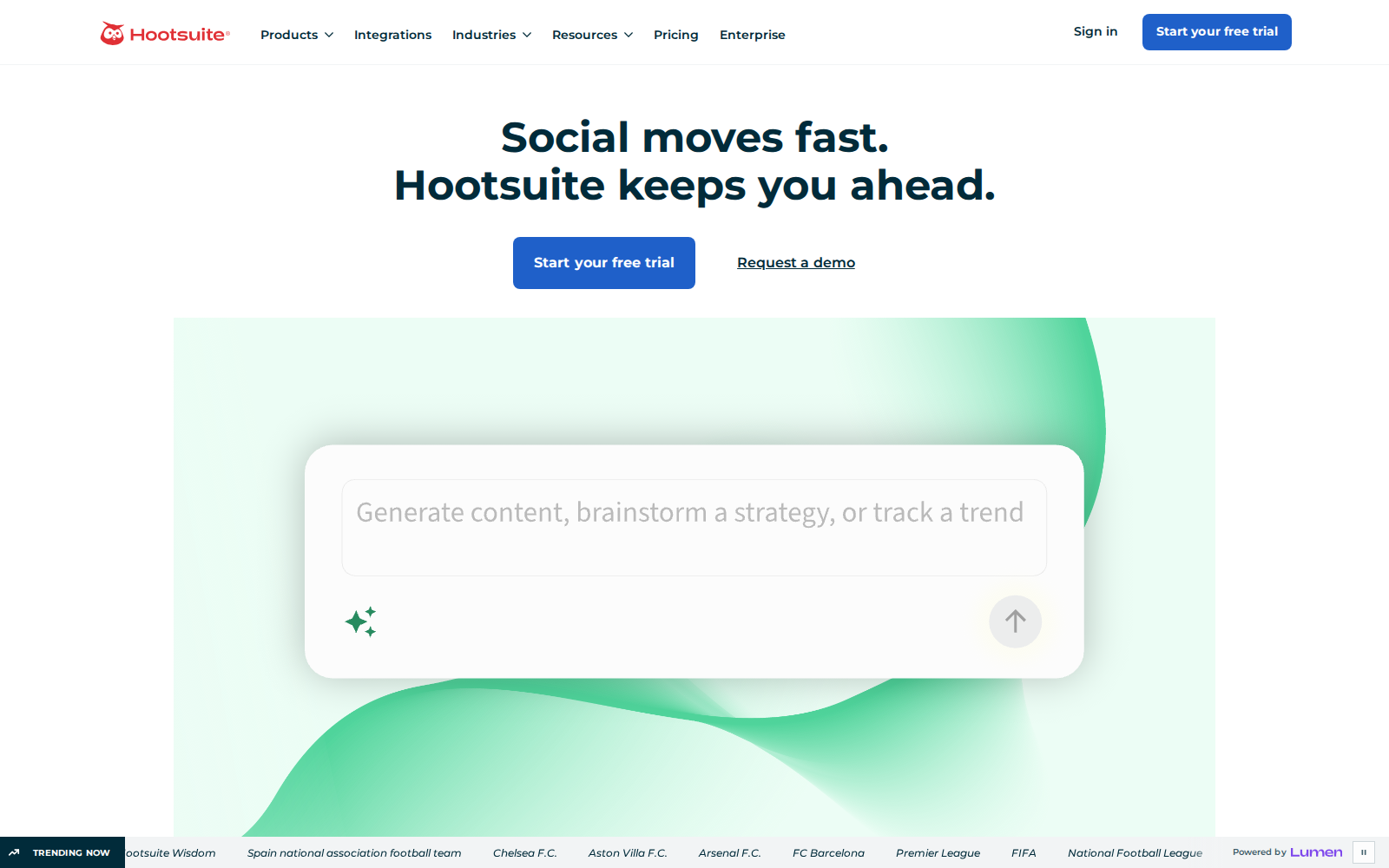
Hootsuite rebuilt itself as a "Social OS" in June 2026: Perch publishing, Nest inbox, Lumen listening, and the Wisdom AI agent with MCP connectors (announcement).
Publishing is the strength: mature cross-network scheduling on every plan, with unlimited posts, bulk upload, a calendar, and Canva built in. Standard covers 10 social accounts, and all self-serve plans get 100 Wisdom AI credits per month (vendor site, July 2026).
Listening repeats Sprout's pattern. Self-serve buyers get Quick Search: a 7-day lookback (30 on Professional and up), 2 compare searches, and no Instagram, Threads, LinkedIn, or Reddit; those sources, 13-month history, alerts, and the full Talkwalker-powered Lumen are all Enterprise-only. Reviewers in 2026 call it "Overpriced for the value" while praising the planner (Capterra). If you land here, read the Hootsuite alternatives comparison too.
Sprout Social vs Hootsuite#
On seats, Hootsuite Standard at $99 per user annual (vendor site, July 2026) undercuts Sprout's $199 per seat Standard, the minimum tier that can even carry Listening (Sprout pricing). On insight, neither wins: Sprout gates it behind a $3,000/mo add-on, Hootsuite behind an Enterprise contract. Pick between them on publishing fit, and buy research separately.
- Pricing
- $99 / $199 / $399 per user/mo, billed annually; no free plan (vendor site, July 2026)
- Best for
- Teams wanting Sprout-style publishing and inbox at lower seat prices
Pros
- Mature cross-network publishing on every plan, unlimited posts
- Wisdom AI credits and MCP connectors on self-serve plans
- Team workflows and advocacy at higher tiers
Cons
- Quick Search only: 7-day lookback, no Instagram or Reddit
- Research-grade listening is Enterprise-only Lumen
- 2026 reviewers call it overpriced for the value
3. Statusbrew: flat plans, with listening inside the top tier#
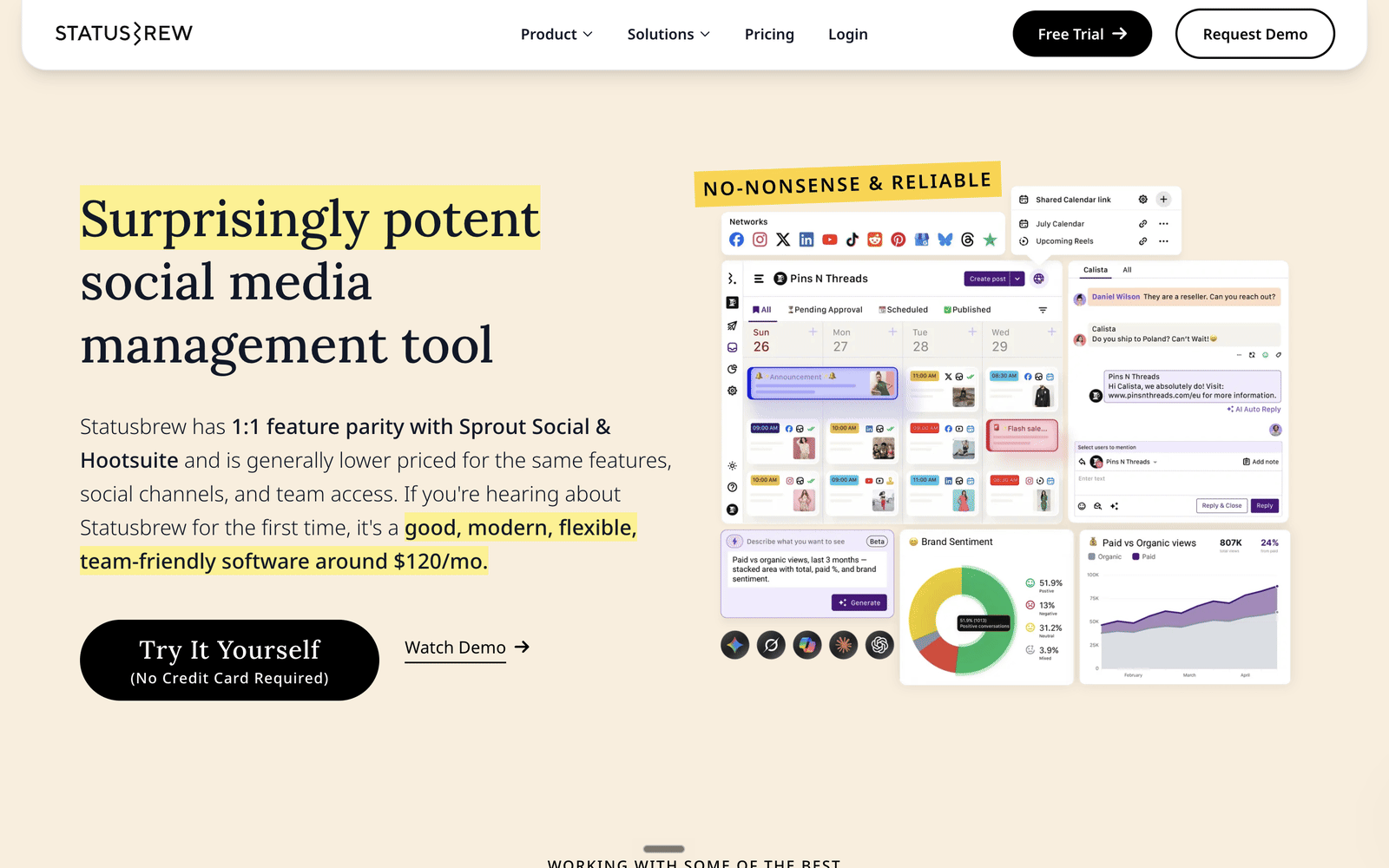
Statusbrew prices by plan instead of by seat: Lite $89/mo ($69 annual), Standard $179 ($129), Premium $299 ($229) for 6 users and 15 profiles (vendor site, August 2026). Adding a teammate does not add a line to the bill.
The multi-account machinery is the reason to look. Spaces isolate each client with their own profiles, inboxes, and reports, approval workflows gate what ships, and reporting runs to 270+ metrics. Capterra reviewers rate it 4.8 across 86 reviews, where the recurring gripe is that plans start high (Capterra).
Listening is the part to read closely. It sits in the plan rather than behind a sales call, and it is quota-shaped: Premium includes "4 Topics/1000 Conversations" per month, extra capacity runs $50/mo, and nothing rolls over (vendor docs, August 2026). That is a tripwire budget, not a research budget, though it undercuts the $3,000/mo Sprout filed for the same job by two orders of magnitude.
Sprout Social vs Statusbrew#
Premium covers six users at $299/mo, while Sprout bills $199 per seat on Standard, the minimum tier that can carry Listening (vendor sites, July and August 2026). Four Sprout seats cost more than a whole Statusbrew workspace. Sprout keeps the deeper listening and the wider integration catalogue. Pick Statusbrew to run many accounts without paying per head, then buy research separately.
- Pricing
- Lite $89/mo ($69 annual) · Standard $179 ($129) · Premium $299 ($229), listening on Premium (vendor site, August 2026)
- Best for
- Agencies and multi-brand teams running many accounts on flat pricing
Pros
- Flat plan pricing; extra users do not multiply the bill
- Spaces, Profile Groups, and approval workflows for multi-account teams
- Listening with AI sentiment is in the plan, not a sales-gated add-on
Cons
- Listening capped at 4 topics and 1,000 conversations a month; extra packs are $50/mo
- X listening off by default on API cost; Reddit backfills 1 month and 300 posts
- Listening and approvals start at Premium; MCP and API are Enterprise-only
4. Buffer: the cheapest seat math, and zero listening#
Buffer prices per channel instead of per seat: a free plan covers 3 channels with 10 scheduled posts each, Essentials is $6 per channel monthly ($5 annual), and Team at $12 ($10) adds unlimited users with approvals (vendor site, July 2026). It publishes to 11 networks including Threads, Bluesky, and Mastodon, and opened a public API in May 2026.
There is no listening or brand monitoring at all; Buffer's own blog recommends pairing it with a dedicated listening tool. The new Insights analytics, shipped July 15, 2026, covers only your own accounts. As the publishing half of a two-tool stack, the math is hard to beat.
- Pricing
- Free for 3 channels; Essentials $6/channel/mo ($5 annual) (vendor site, July 2026)
- Best for
- Solo creators and small teams who only need scheduling
Pros
- Cheapest paid publishing; genuinely usable free plan
- Team plan: unlimited users, approvals, per-channel billing
Cons
- No listening or monitoring of any kind
- Analytics cover only your own accounts
The enterprise listening suites#
If you priced Sprout Listening and kept shopping upward, this is that tier. Deeper data than Sprout's add-on, same shape: annual sales-gated contracts, Boolean operators, and analysts required to turn the firehose into answers. Notice what those contracts actually price. The dashboards that took analysts months to assemble are now one prompt to a tool-using AI, and decade-deep archives lose value while markets move monthly and research runs on fresh data. A five-figure contract largely pays for that depreciating past.
5. Brandwatch: the deepest archive, metered by the query#
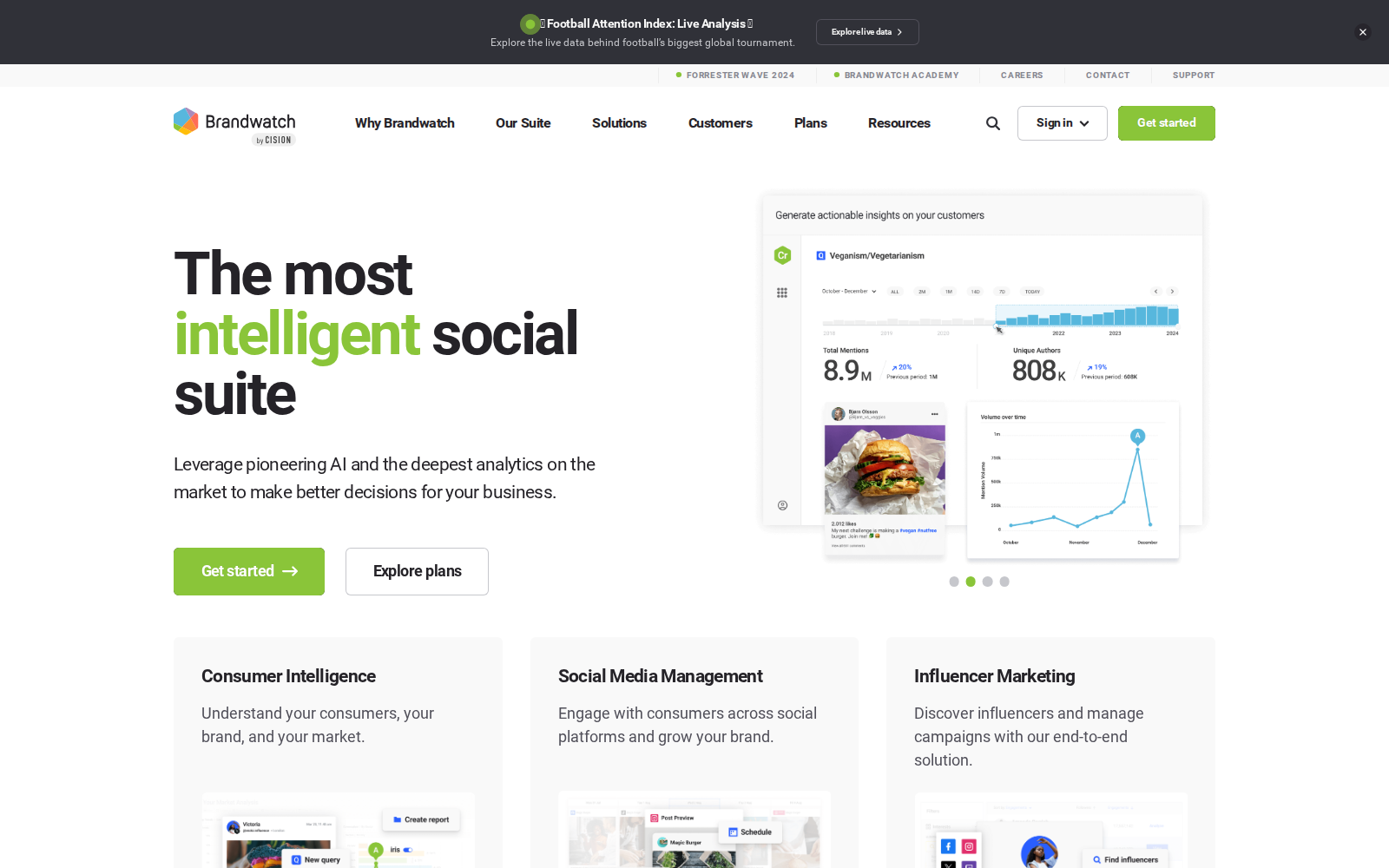
Brandwatch holds the category's deepest archive: 1.4+ trillion posts back to 2008, image analysis for logos, objects, and scenes, an official TikTok Mentions API, and 70,000+ podcasts with transcripts.
Access is procurement-shaped. There is no public pricing; Vendr's data across 123+ purchases puts the median near $50k/yr, and its UK G-Cloud listing meters entry access at 5 saved queries around GBP 900/mo, with logo tracking sold per logo per year. Reviewers rank the Boolean learning curve as the top drawback and describe manually "grooming the sentiment" (Capterra). The archive itself is a wasting asset: a trillion posts back to 2008 answer questions about the past, while the audience shifts worth catching live in the last few weeks of conversation.
- Pricing
- Custom annual contracts; Vendr median ~$50k/yr (source)
- Best for
- Enterprise insights teams with dedicated analysts
Pros
- Deepest historical archive in this list, back to 2008
- Real image intelligence; official TikTok data
Cons
- Five-figure contracts; queries are the metered unit
- Boolean expertise and manual sentiment work required
- No video-analysis claim; audio limited to TV and radio
6. Meltwater: PR breadth first, social as the add-on#
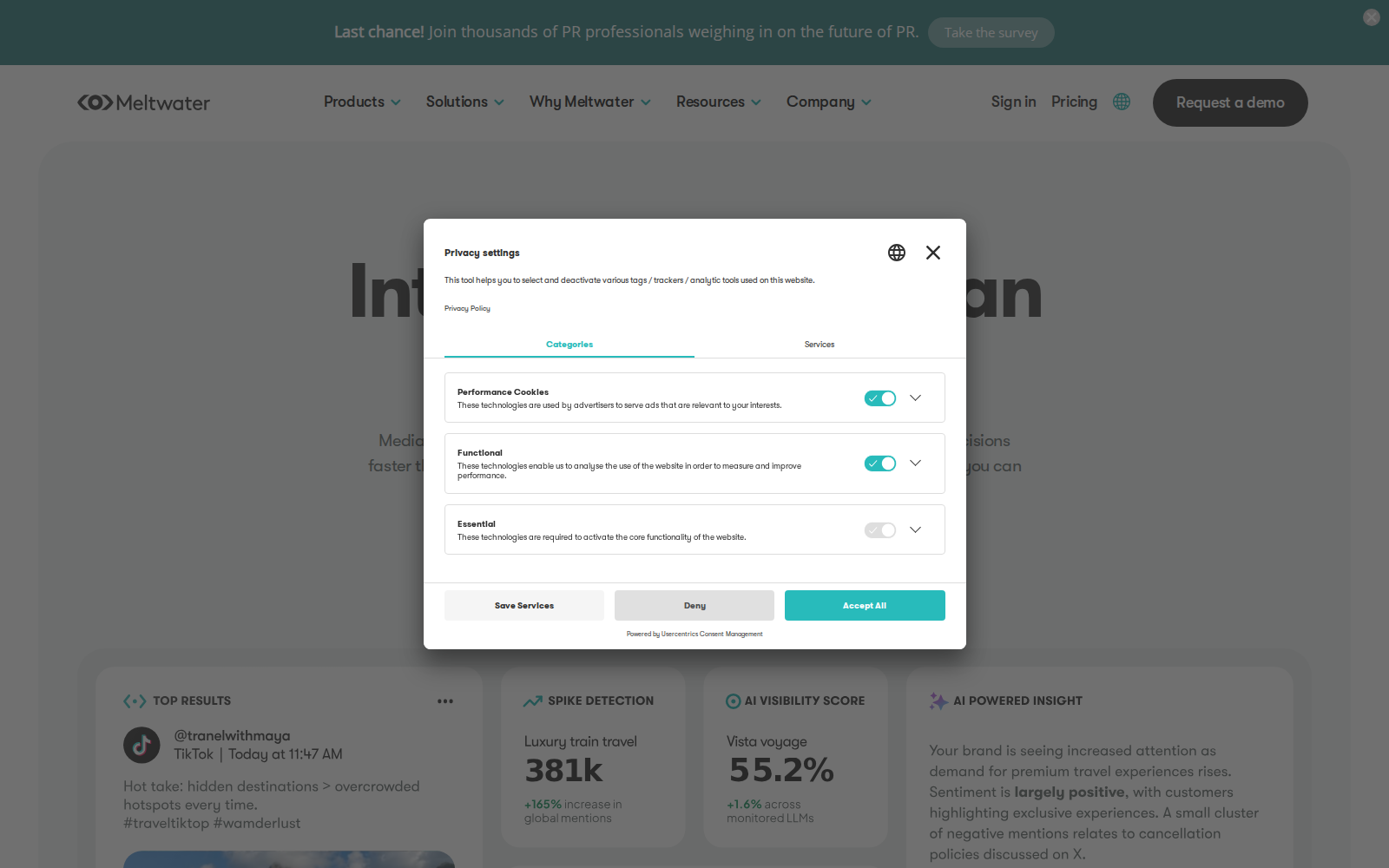
Meltwater is a PR and media platform at its core: news back to 2009, print, broadcast, and podcasts, with an official Reddit partnership. Its AI is ahead of most of this tier, with the Mira assistant and a hosted MCP server expanded in July 2026.
The packaging mirrors Sprout's problem at a bigger scale: social listening is an add-on that pricing guides place at $10k to $30k/yr on top of the base product. Contracts are quote-only with a 12-month minimum and 3 to 7% annual escalators, Vendr median ~$25k/yr. Social history runs 15 months standard, and a July 2026 reviewer reports "information not being brought up" and AI analyses that "can be inaccurate" (AWS Marketplace).
- Pricing
- Quote-only, 12-month minimum, escalators built in; Vendr median ~$25k/yr (source)
- Best for
- PR teams whose primary surface is earned media
Pros
- Widest media net: news, print, broadcast, podcasts
- Mira AI and hosted MCP are shipping today
Cons
- Social listening is an add-on to a PR product
- 15-month social archive; contracts escalate yearly
- Reviewers report missed mentions and inaccurate AI reads
7. Talkwalker: the engine behind Hootsuite's Enterprise gate#
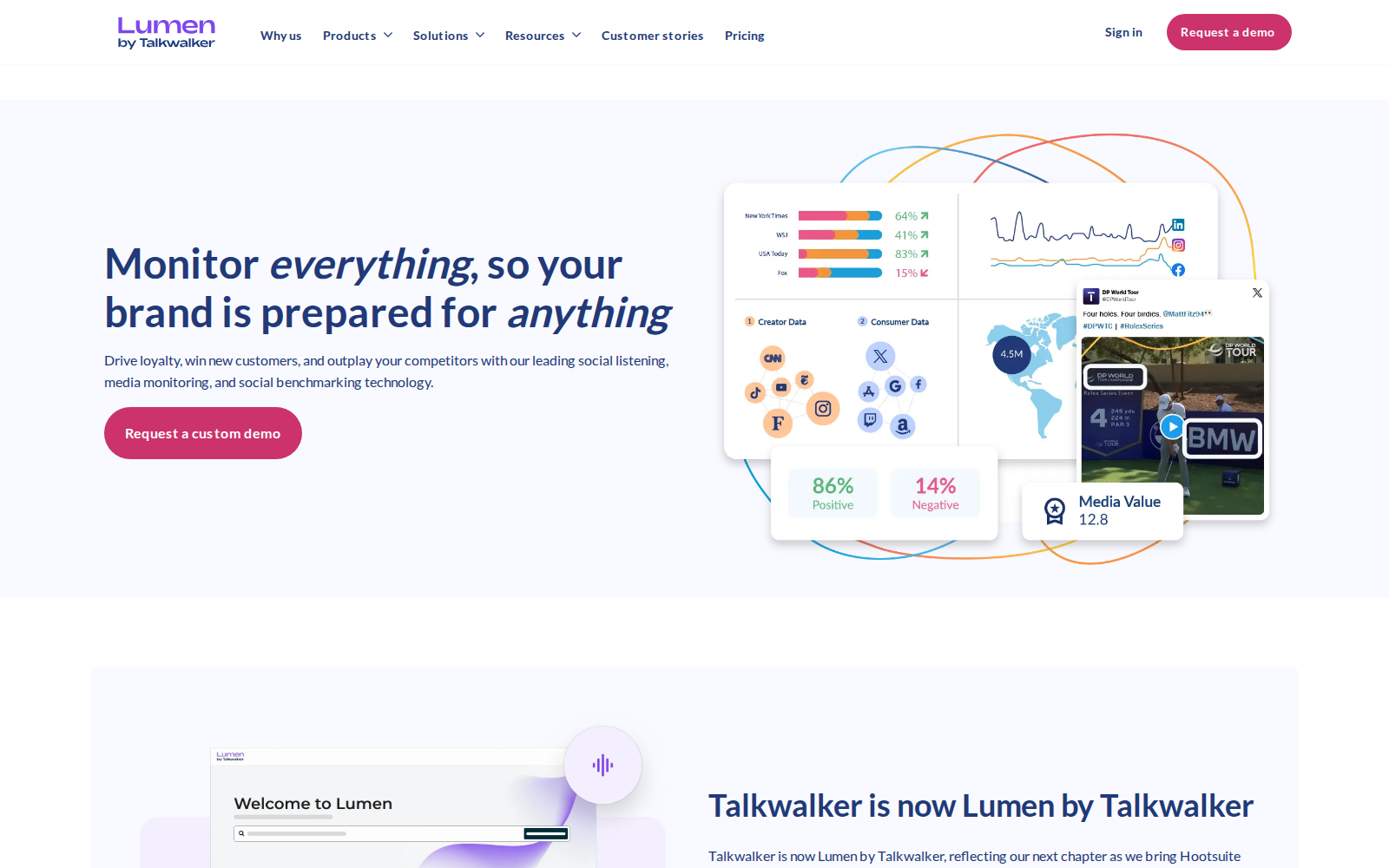
Talkwalker, rebranded Lumen by Talkwalker under Hootsuite in May 2026, advertises the strongest visual monitoring in the category: a database of "30,000 brands, scenes, objects and products", 50M+ videos analyzed daily, and speech-to-text on podcasts (vendor site, July 2026), with Blue Silk AI sentiment in 192 languages.
You cannot simply buy it. There is no self-serve; the median contract runs around $27k/yr, Hootsuite reserves Talkwalker-powered listening for Enterprise customers, and topics, filters, and history are capped per tier. Even its own Yeti agent marketing concedes users previously needed Boolean queries and complex dashboards; reviewers describe a firehose that still needs analysts. The multimodal analysis it gates behind that contract (transcription, on-screen text, logo detection) is what buzzabout sells self-serve from $50/mo.
- Pricing
- Custom quotes only, annual; median ~$27k/yr (vendor site, July 2026)
- Best for
- Global brands measuring logo and video exposure at scale
Pros
- Advertised image, video, and speech analysis at scale
- 192-language sentiment via Blue Silk AI
Cons
- No self-serve; demo wall plus Hootsuite Enterprise gate
- Topics, filters, and history capped by tier
- Insight extraction still lands on your analysts
The keyword trackers#
If Sprout's Listening quota was your complaint, know that the SMB trackers run the same declare-keywords-count-mentions loop, just cheaper. Useful as alert tripwires, not as research.
8. Brand24: polished keyword monitoring at SMB prices#
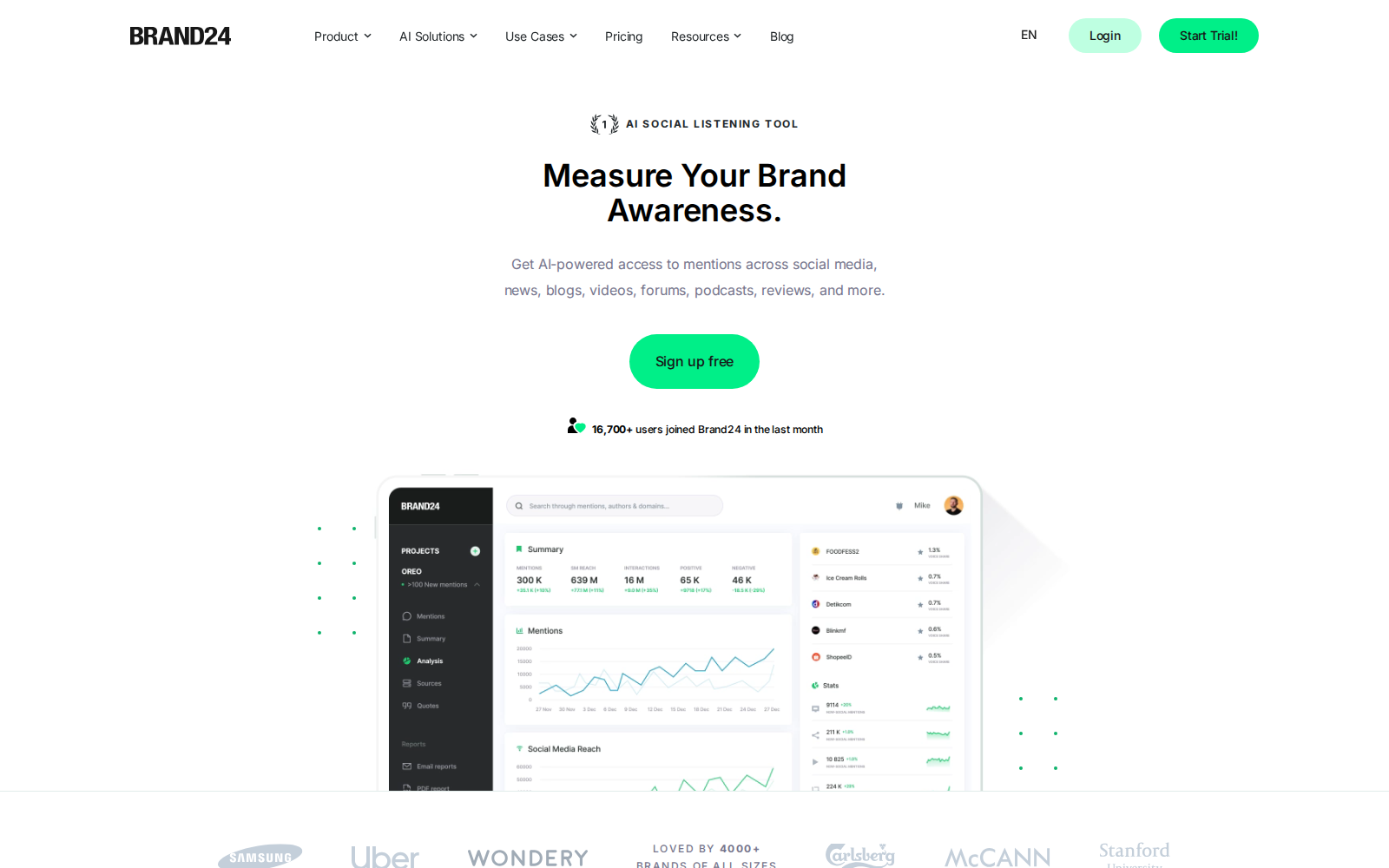
Brand24, now part of Adobe after the Semrush acquisition closed in April 2026, is the most refined SMB tracker: broad text sources including news, podcasts, and newsletters, an AI Visibility add-on tracking 9 LLMs, and an MCP server.
The quota logic will feel familiar from Sprout. Entry is $249/mo ($199 annual) for 3 keywords, 2,000 mentions, and 12-hour updates (vendor site, July 2026); AI features beyond sentiment start on the $499/mo Pro tier. Backfill maxes out around 30 days, and its demographics are third-party estimates its own docs call approximate. The full tracker landscape is in our Brand24 alternatives comparison.
- Pricing
- $249/mo ($199 annual): 3 keywords, 2,000 mentions (vendor site, July 2026)
- Best for
- SMB brands watching a stable keyword set across text sources
Pros
- Wide text sources at SMB prices, news and podcasts included
- AI Visibility add-on and MCP server
Cons
- 3 keyword slots at entry; every question spends one
- ~30-day backfill; AI depth starts at $499/mo
- Reviewers report noisy filters, count-heavy summaries
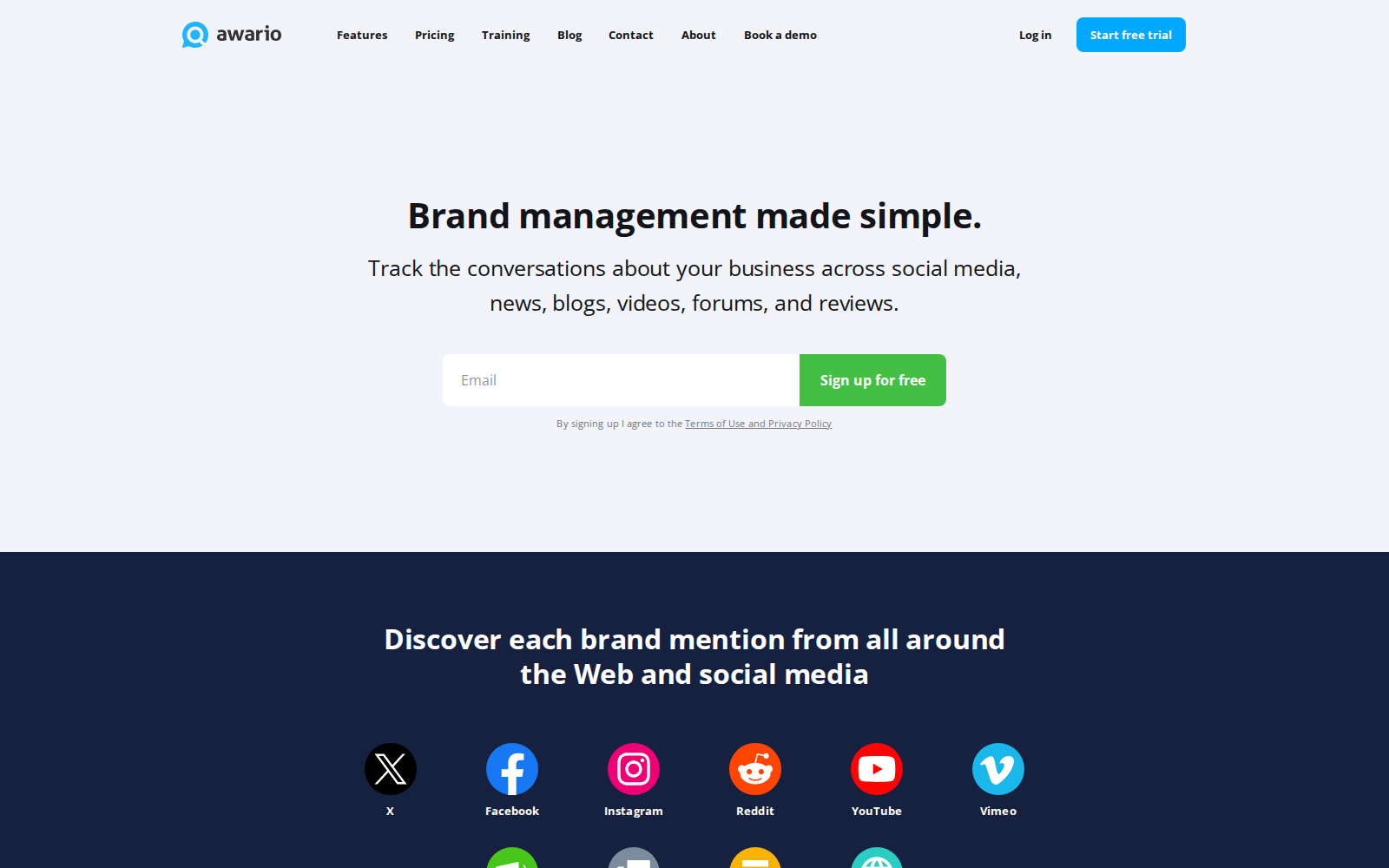
9. Awario: the budget tripwire#
Awario is the cheapest real keyword alerting here: Starter at $49/mo ($29 annual) for 3 topics and 30k mentions, with unlimited keywords per topic and Boolean on every plan (vendor site, July 2026).
The gaps define it. X history reaches back only 7 days, Facebook and Instagram cover only pages you connect, Reddit comments are missed and sentiment is called "directional" (vendor site, July 2026), and no AI layer shipped through 2025 or 2026. A fine tripwire beside a real research tool, not a Sprout replacement on its own.
- Pricing
- Starter $49/mo ($29 annual): 3 topics, 30k mentions (vendor site, July 2026)
- Best for
- Solo marketers needing basic brand alerts at minimum cost
Pros
- Cheapest real listening tool on annual billing
- Boolean search on every plan
Cons
- 7-day X history; closed Facebook and Instagram
- Misses Reddit comments; no AI layer
What about just using ChatGPT?#
Plenty of teams cancel Listening quotes and paste screenshots into ChatGPT instead. The answers sound confident, and the price is right.
But ChatGPT cannot see social conversations; it reasons from the fragment you happened to paste. That is opinion generation, not audience research.
Grounding fixes it: buzzabout's MCP connector feeds labeled, real conversation data into Claude, ChatGPT, or Cursor, so the assistant you already use answers from evidence instead of vibes.
How to choose#
Your job is understanding an audience
→ buzzabout
Research is the product, not a $3,000/mo add-on.
You want Sprout's suite features at lower seat cost
→ Hootsuite
Comparable publishing from $99 per user annual.
You run many accounts and hate per-seat math
→ Statusbrew
Flat plans from $129/mo annual; listening capped at 4 topics.
You only schedule posts
→ Buffer
$6 per channel; pair it with a research tool.
You want AI tools answering from real social data
→ buzzabout, MCP from $150/mo
Meltwater and Brand24 have MCP at their price points.
You need video and audio understood on a self-serve budget
→ buzzabout
The alternative is Talkwalker inside Hootsuite Enterprise.
Earned media is your primary surface
→ Meltwater
News, print, and broadcast are what its money buys.
You have analysts and a five-figure budget
→ Brandwatch
The deepest archive, though past data depreciates as markets move.
You just need cheap brand alerts
→ Awario
$29/mo annual; accept the coverage gaps.
Frequently asked questions#
What is the best Sprout Social alternative? For insight work, buzzabout: it replaces keyword Topics with plain-language questions, labels every mention on 10 dimensions, and profiles the engaged audience. For the suite itself, Hootsuite is the closest per-seat swap, Statusbrew the flat-plan one if seat counts are the problem, and Buffer the cheapest per-channel one.
How much does Sprout Social cost in 2026? Seats start at $99 per seat monthly ($79 annual) on Essentials, and Listening requires at least the $199 per seat Standard plan (vendor site, July 2026). The Listening add-on itself appears at $3,000/mo in Sprout's own November 2025 UK G-Cloud filing.
How much does Sprout Social Listening cost? Sprout does not publish a price; Listening is sales-gated. Its own November 2025 G-Cloud filing lists the add-on at $3,000/mo, on top of Standard seats at $199 each (vendor site, July 2026), with Topics capped by contract and a 30-day default backfill.
What is the cheapest way to replace Sprout Social? Split it. Buffer covers publishing from $6 per channel (vendor site, July 2026), and buzzabout covers research from $40/mo annual (pricing). The pair usually lands far under one Sprout Standard seat plus Listening.
Which Sprout Social alternatives analyze video and audio? Self-serve, only buzzabout: transcription, on-screen OCR, and object and logo detection across its six platforms. Talkwalker advertises strong visual and speech analysis but sells it through enterprise contracts; Brandwatch analyzes images, not video.
Can these tools feed data to Claude or ChatGPT? buzzabout ships MCP connectors from $150/mo and a REST API from $350/mo (pricing). Hootsuite added Wisdom MCP connectors in its 2026 rebuild, Brand24 runs an MCP server, and Meltwater hosts one at enterprise pricing.
Stop renting insight by the seat#
Sprout charges twice: once per seat for the suite, and again, at a filed $3,000/mo, for the privilege of understanding your audience through a quota. The research model inverts that: questions are free to ask, and the audience understanding is the product.
Ask one real question about your market and see what comes back: structured pains, trending topics, buyer language, and psychographic profiles of who is talking. buzzabout's free trial gives 500 free mentions over 3 days, no demo call, no annual contract.